
You want to do all this preparation of the soil about three weeks before planting the iris. The fertilizer and organic matter needs to be worked into the soil well. Using peat moss, manure, or compost increases the organic matter in the soil.
Before planting iris bulbs you will need to condition the soil with the use of slow release low nitrogen fertilizer. It is best to leave about a foot surrounding the iris for growth. They can grow to roughly three feet tall and over the years will spread out through their root system. This sunny area of the garden needs to be large enough for the iris to spread out and grow. Iris will need to have at least six hours of full sunlight daily.
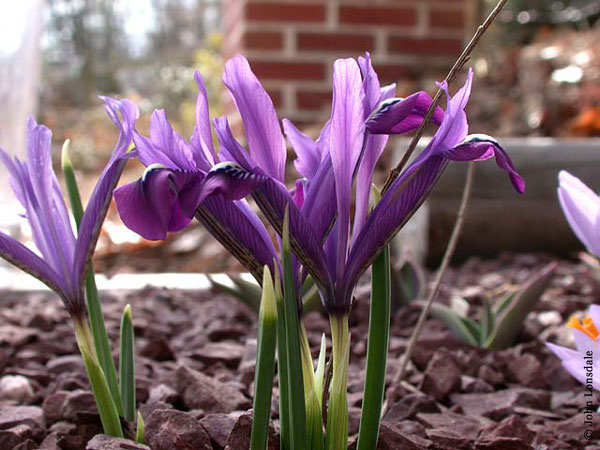
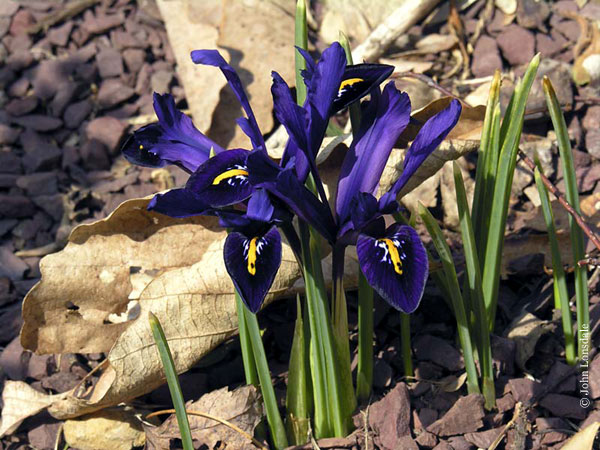
These irises are usually smaller in stature and have smaller blooms. The bulbous iris which grow from bulbs need to have a dormant period after blossoming. Three of the popular iris rhizomes are the Bearded, Beardless and the Crested. After planting they produce their sword-like leaves that will eventually overlap and form fan-like foliage.
The rhizomes have thicker stems that will grow horizontally or partially underground. Irises are grouped into two categories, the bulbous and the rhizome.
Before planting iris bulbs you will need to condition the soil with the use of slow release low nitrogen fertilizer. It is best to leave about a foot surrounding the iris for growth. They can grow to roughly three feet tall and over the years will spread out through their root system. This sunny area of the garden needs to be large enough for the iris to spread out and grow. Iris will need to have at least six hours of full sunlight daily.
These irises are usually smaller in stature and have smaller blooms. The bulbous iris which grow from bulbs need to have a dormant period after blossoming. Three of the popular iris rhizomes are the Bearded, Beardless and the Crested. After planting they produce their sword-like leaves that will eventually overlap and form fan-like foliage.
The rhizomes have thicker stems that will grow horizontally or partially underground. Irises are grouped into two categories, the bulbous and the rhizome.